
Very Professional
Stone Restoration Grays
Restoration Services for Domestic and Commercial Customers in Grays.
Free Estimates…
LEARN MORE
Stone Restoration Services In Grays
Stone is a natural, raw, organic material, removed from in the earth, within quarried mountains. Stones can be hand cut or machine cut, all types of stones are an extremely popular choice for the use in many structural projects, however, over time stone can fade, weaken, deteriorate, obtain various stains, scratches, chips and possibly need complete replacing.
Stone is fortunately extraordinarily robust and can be brought back to life with professional expert restorers, like our teams, this renewal is called stone restoration, and is the ideal solution for detailed restoration tasks, serious repair challenges, precise replication projects, or complete replacements.
This is where Original Brick Pointing is indispensable, a service which you can trust, a leading UK stone restoration and conservation company, professional and efficient. Working in London and Essex, on small and large, commercial, and domestic properties/structures. Our hands-on approach, meticulous attention to detail, extensive experience and substantial knowledge base is what sets us apart from the rest of the industry.
We at Original Brick Pointing adore what we do here, we are able to recognise the value and significance of traditional and historical buildings needful of distinct and unique essential methods when being worked upon, subsequent across to the fresher, newer, and modern structure types we understand the different approach and necessity for more contemporary technical type advancements and methods. With all our accrued abundance of experience and intrinsic insight, we are delighted to bring you the best of the best teams. Our remarkable restorers have in-depth familiarity with vast varieties of materials, elements, supplies and tools and are fully capable of delivering innovative solutions for seemingly irrevocably damaged pieces.
Working together with our clients, enables complete customisation, so you can acquire the exact result you desire. Before undertaking any work our stone restorers at Original Brick Pointing will review and discuss, distinctive choices, allowing us to demonstrate all obtainable restoration possibilities, collectively we will design and plan all tailored needs together and with our guidance, support and advice, we will take you through the procedure with complete transparency and clarity.
For the highest standards and pioneering stone restoration services, call us today on 07481 838 547 or email us today at info@alexbrickpointing.co.uk for your free no-hassle quotation, or for any additional questions that you may need support with.
Stone Restoration advantages:
- Enhance visual appearance
- Define structural features
- Improve blend in original stonework with new
- Combine with extensive repairs
- Prevent surface decay damage
- Assist in revealing and identifying other structural issues
- Significant increasing of property value
Areas we can aid:
Dirt, grime, dust and algae elimination
Façade cleaning
Graffiti removal
Paint removal
Stone cleaning
Our other services include:
- Brick cleaning
- Brick pointing and repointing
- Chimney repair
- Paint removal
- Pebble dash removal
- Stone restoration
Styles Of Pointing - Using Natural Lime Mortar
Tuck Pointing
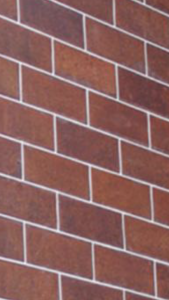 Tuck pointing is a highly specialised technique for filling joints in masonry, especially brickwork, to create the illusion that they are finer and more regular. Joints are filled flush with mortar coloured to match the bricks and then scored with a narrow groove into which a thin ribbon of contrasting (usually white, but occasionally black, red or brown) mortar is pressed or ‘tucked’.
Between the late 17th century and the early 20th centuries, tuck pointing was frequently employed on facades or enrichments to imitate superior ‘gauged work’. It was also sometimes used to disguise irregular and damaged or cheap bricks. In exceptional circumstances, it may be introduced retrospectively today for repointing where the edges of bricks (arrises) have been spoilt.
Tuck pointing can go unnoticed, particularly where it has weathered. Evidence may survive, though, in sheltered areas, such as beneath window cills or eaves.
Ribbon Pointing
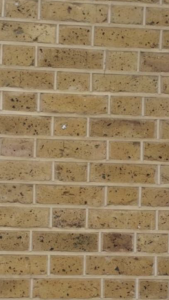 This is similar to weather struck pointing, however - while the pressed mortar is still not dry, we cut the top and bottom edges of the joints parallel, often used to give a regular joint width to irregular brick and stone masonry.
Flush Pointing
 In this type of pointing, the pressed into the raked joints mortar is finished off flush with the edges of the bricks. This process gives a rough “old look” appearance. This type of pointing requires a lot of skills and experience to get the necessary results. It is used extensively in brickwork and stone masonry face work.
Penny Roll Pointing
 Penny Rolling uses lined indentation made with an old penny to regularise the look of the pointing and give the illusion of bricks with sharp edges. The Mortar is re-pointed flush with the brickwork, and using a rule and an old penny, the penny is rolled in the middle of the brick joints, leaving a straight, indented line in the mortar
Weather Struck Pointing
 ‘Weather struck’ joints are formed with trowels. The inset edge of the joint should not be exaggerated, about 2mm is enough – the thickness of a trowel blade is a guide. The forward edge should finish on the edge of the brick. Cross joints are formed first. A small pointing trowel is held with its edge pressed into the mortar against one brick and drawn across the joint against the other. A right-handed bricklayer tends to form the inset on the left side and draw to the right. Either direction is acceptable, but make sure that it is the same throughout the work; otherwise the brickwork will look patchy. Bed joints are formed with the straight edge of a normal trowel pressed into the mortar against the upper brick and, while holding it against the edge of the lower brick, pushing it along and down. The straight sloping surfaces of the bed joints tend to catch the light and accentuate them. This joint can give the work a neat, well-ordered appearance and looks best with well-formed regular bricks.
Weather-struck joints can give the work a well-ordered appearance.
Original Brick Pointing
Our Projects
SEE GALLERY


