
Brickwork Specialists
Brick Repointing Hither Green
Restoration Services for Domestic and Commercial Customers in Hither Green
Free Brickwork Estimates…
LEARN MORE
Brick Pointing In Hither Green
What Is Brick Pointing?
Repointing is the method of renewing and restoring any pointing.
Pointing is grouped under masonry construction maintenance; this is a technical method to repair and restore mortar joints that are between bricks and/or other masonry components.
The purpose of pointing is to replace any/all ageing and weakened mortar joints with fresh new mortar, of the equivalent or as a similar composition as the original.
Mortar joints can break, crack, chip, disintegrate and decay due to many reasons, including building/structure age.
These problems can be caused by material loss or simply over time. Severe weather conditions can also severely affect mortar joints. These problems often allow water to enter through cavities which can cause massive damage, freezing, melting, and subsequently depositing salt on building/structures, leading to damp issues, especially for cavity walls.
Here at Original Brick Pointing our expert exterior brick pointers in Hither Green are wonderfully trained, extremely experienced, 100% proficient, and completely successful in this type of process.
Essentially our team will remove all substandard and defective mortar, by hand using reinforced hand tools or with the use of safe and regulated power tools to repair damages whilst all joints are raked down to a depth of around 15-20mm, surfaces are cleaned impeccably and the mortar is replaced using natural lime mortar, perfectly delivering the finest results.
Local Brick Pointers
Repointing advantages:
- Alleviates higher central heating expenses
- Effectively weatherproofs the walls
- Enhances the aesthetic appeal, increasing significant value to the building
- Improves the underlying structural integrity of the brickwork
- Reduces any continuing brickwork maintenance
- Further aid in, saleability, conservation and pollution damage mitigation
- Resolves prominent cavity and damp problems
Styles of pointing:
Pointing can be conducted in many forms with different effect choices, this will be contingent on individual brick or masonry nature.
- Flush Pointing
- Ribbon Pointing
- Penny Roll Pointing
- Tuck Pointing
- Weather Struck Pointing
GET QUOTE
Styles Of Pointing - Using Natural Lime Mortar
Tuck Pointing
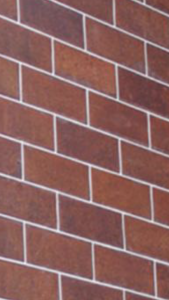 Tuck pointing is a highly specialised technique for filling joints in masonry, especially brickwork, to create the illusion that they are finer and more regular. Joints are filled flush with mortar coloured to match the bricks and then scored with a narrow groove into which a thin ribbon of contrasting (usually white, but occasionally black, red or brown) mortar is pressed or ‘tucked’.
Between the late 17th century and the early 20th centuries, tuck pointing was frequently employed on facades or enrichments to imitate superior ‘gauged work’. It was also sometimes used to disguise irregular and damaged or cheap bricks. In exceptional circumstances, it may be introduced retrospectively today for repointing where the edges of bricks (arrises) have been spoilt.
Tuck pointing can go unnoticed, particularly where it has weathered. Evidence may survive, though, in sheltered areas, such as beneath window cills or eaves.
Ribbon Pointing
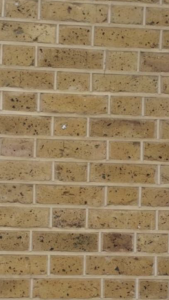 This is similar to weather struck pointing, however - while the pressed mortar is still not dry, we cut the top and bottom edges of the joints parallel, often used to give a regular joint width to irregular brick and stone masonry.
Flush Pointing
 In this type of pointing, the pressed into the raked joints mortar is finished off flush with the edges of the bricks. This process gives a rough “old look” appearance. This type of pointing requires a lot of skills and experience to get the necessary results. It is used extensively in brickwork and stone masonry face work.
Penny Roll Pointing
 Penny Rolling uses lined indentation made with an old penny to regularise the look of the pointing and give the illusion of bricks with sharp edges. The Mortar is re-pointed flush with the brickwork, and using a rule and an old penny, the penny is rolled in the middle of the brick joints, leaving a straight, indented line in the mortar
Weather Struck Pointing
 ‘Weather struck’ joints are formed with trowels. The inset edge of the joint should not be exaggerated, about 2mm is enough – the thickness of a trowel blade is a guide. The forward edge should finish on the edge of the brick. Cross joints are formed first. A small pointing trowel is held with its edge pressed into the mortar against one brick and drawn across the joint against the other. A right-handed bricklayer tends to form the inset on the left side and draw to the right. Either direction is acceptable, but make sure that it is the same throughout the work; otherwise the brickwork will look patchy. Bed joints are formed with the straight edge of a normal trowel pressed into the mortar against the upper brick and, while holding it against the edge of the lower brick, pushing it along and down. The straight sloping surfaces of the bed joints tend to catch the light and accentuate them. This joint can give the work a neat, well-ordered appearance and looks best with well-formed regular bricks.
Weather-struck joints can give the work a well-ordered appearance.
Original Brick Pointing
Our Projects
SEE GALLERY


